
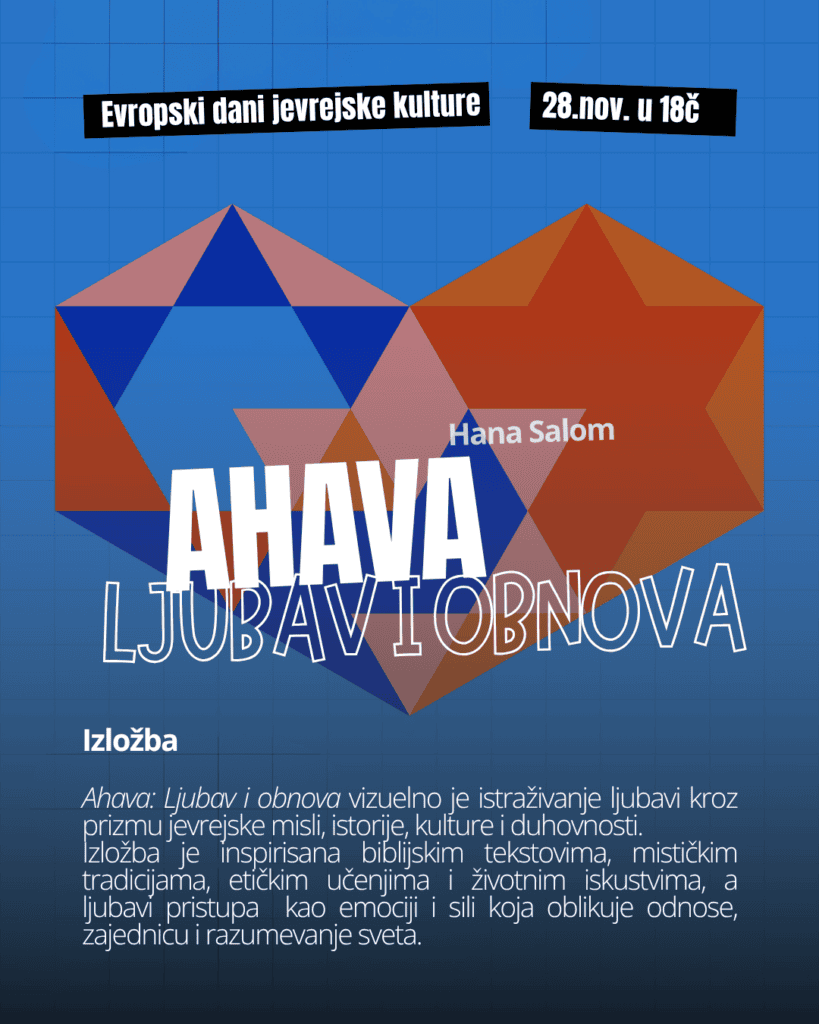
Ahava: Love and Repair is a visual exploration of love through the lens of Jewish thought, history, culture, and spirituality.
Drawing inspiration from biblical texts, mystical traditions, ethical teachings, and lived experience, the exhibition approaches love not only as an emotion, but as a force that shapes our relationships, communities, and understanding of the world. Through themes of longing and belonging, presence and absence, fracture and restoration, the works reflect on love in its many forms: romantic, familial, communal, and divine.
At the heart of the exhibition is an interest in the Jewish idea of tikkun—repair—and the possibility that love itself can be an act of healing, responsibility, and renewal. Through drawing, painting, and selected mixed-media interventions, Ahava: Love and Repair seeks to create a conversation between ancient narratives and contemporary experience, inviting viewers to reflect on the ways love continues to shape both our inner lives and the world we share.
Ahava: Love and Repair is a visual exploration of love through the lens of Jewish thought, history, culture, and spirituality.
Drawing inspiration from biblical texts, mystical traditions, ethical teachings, and lived experience, the exhibition approaches love not only as an emotion, but as a force that shapes our relationships, communities, and understanding of the world. Through themes of longing and belonging, presence and absence, fracture and restoration, the works reflect on love in its many forms: romantic, familial, communal, and divine.
At the heart of the exhibition is an interest in the Jewish idea of tikkun—repair—and the possibility that love itself can be an act of healing, responsibility, and renewal. Through drawing, painting, and selected mixed-media interventions, Ahava: Love and Repair seeks to create a conversation between ancient narratives and contemporary experience, inviting viewers to reflect on the ways love continues to shape both our inner lives and the world we share.
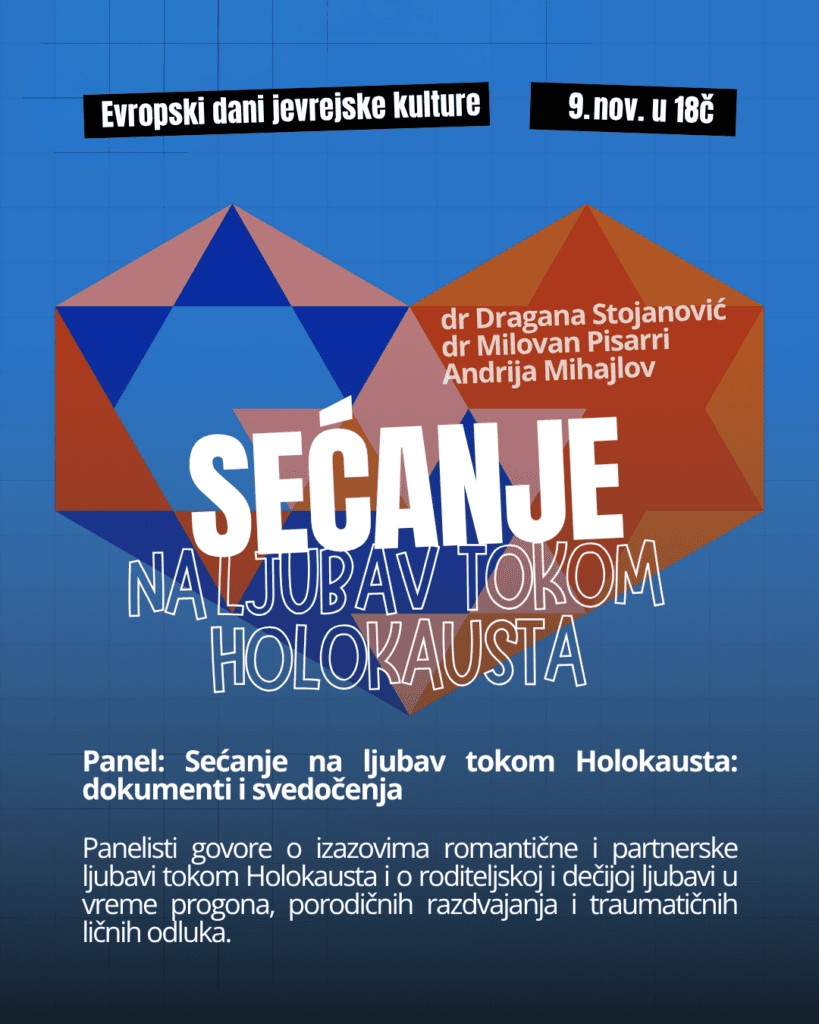
This panel explores everyday realities of love during the Holocaust through analysis of preserved documents, letters, diaries, memoirs, and survivor testimonies. The panelists will discuss the challenges of romantic love and intimate partnerships during the Holocaust, as well as parental and filial love in times of persecution, family separation, and traumatic personal decisions. The discussion will also address the complex relationships between children and their parents in the postwar period, following years spent in hiding. The aim of this panel is to analyze the significance and role of historical sources in understanding the everyday manifestations of love under the complex conditions of persecution, suffering, and survival during the Holocaust.
Panelists:
Dr. Milovan Pisarri, Research Fellow, Shoah Lab, Institute for Philosophy and Social Theory, University in Belgrade
MA Andrija Mihajlov, Research Assistant, Shoah Lab, Institute for Philosophy and Social Theory, University in Belgrade
Moderator: Dr.
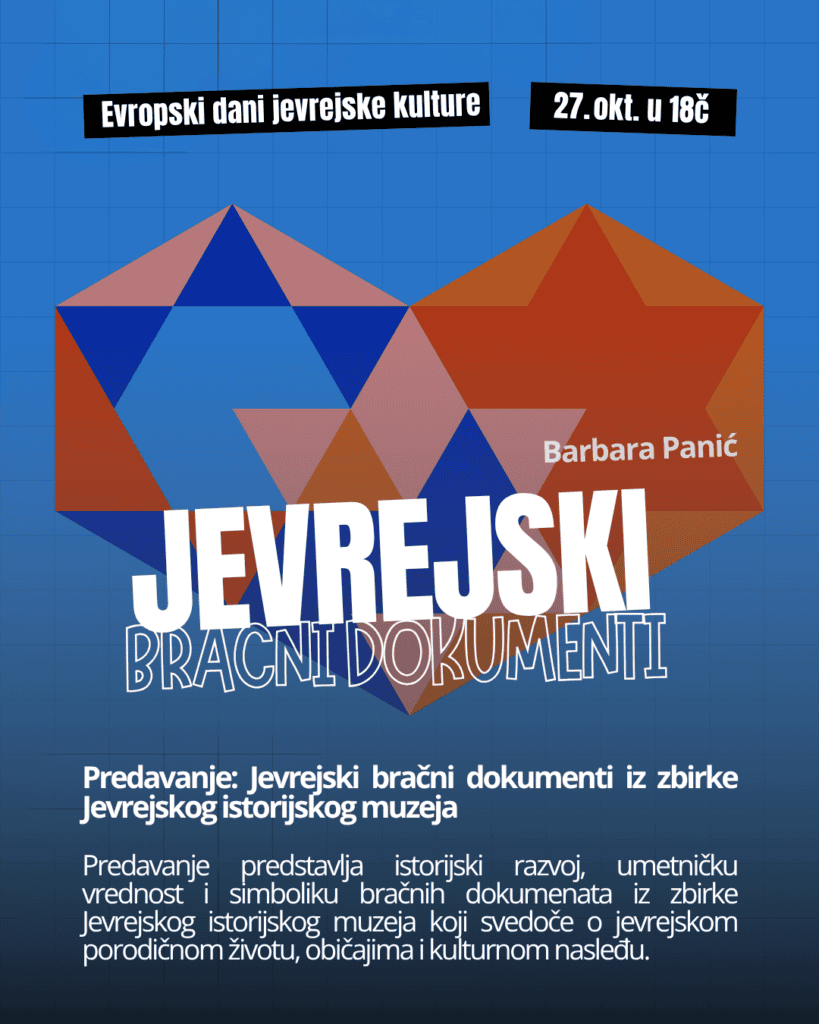
A traditional Jewish wedding ceremony is unimaginable without the ketubah – the marriage contract presented by the groom to the bride. The Hebrew word ketubah literally means "that which is written," and, according to Jewish law, it is a legally binding document that defines the husband's obligations toward his wife. Through selected examples from the collection of the Jewish Historical Museum, this lecture will explore the historical development, artistic value, and symbolism of these unique documents, which offer a fascinating insight into Jewish family life, customs, and cultural heritage.
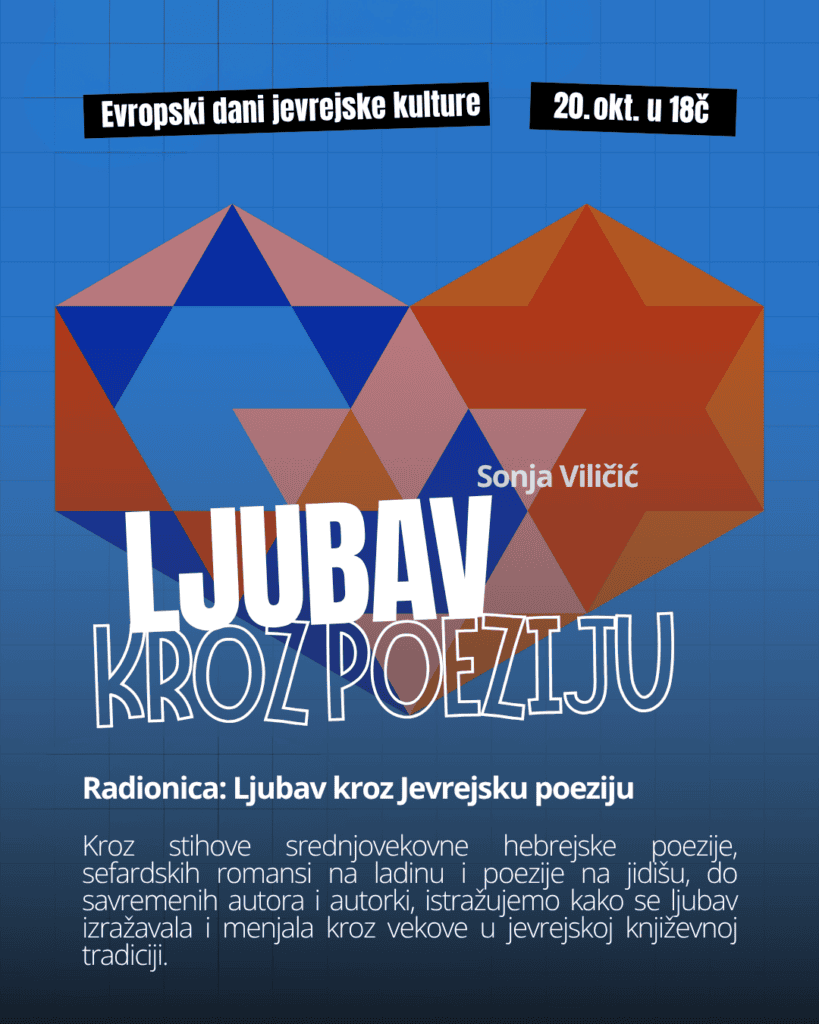
Through poetry spanning the biblical Song of Songs, medieval Hebrew poetry, Sephardic romances in Ladino, Yiddish poetry, and the works of contemporary Jewish writers, we will explore how love has been expressed and reimagined across centuries of Jewish literary tradition. The workshop combines poetry reading with historical context and conversation about universal themes such as love, longing, belonging, loss, and hope. Through shared reading and discussion, we will discover how verses written centuries ago continue to speak to our emotions, relationships, and search for belonging today.
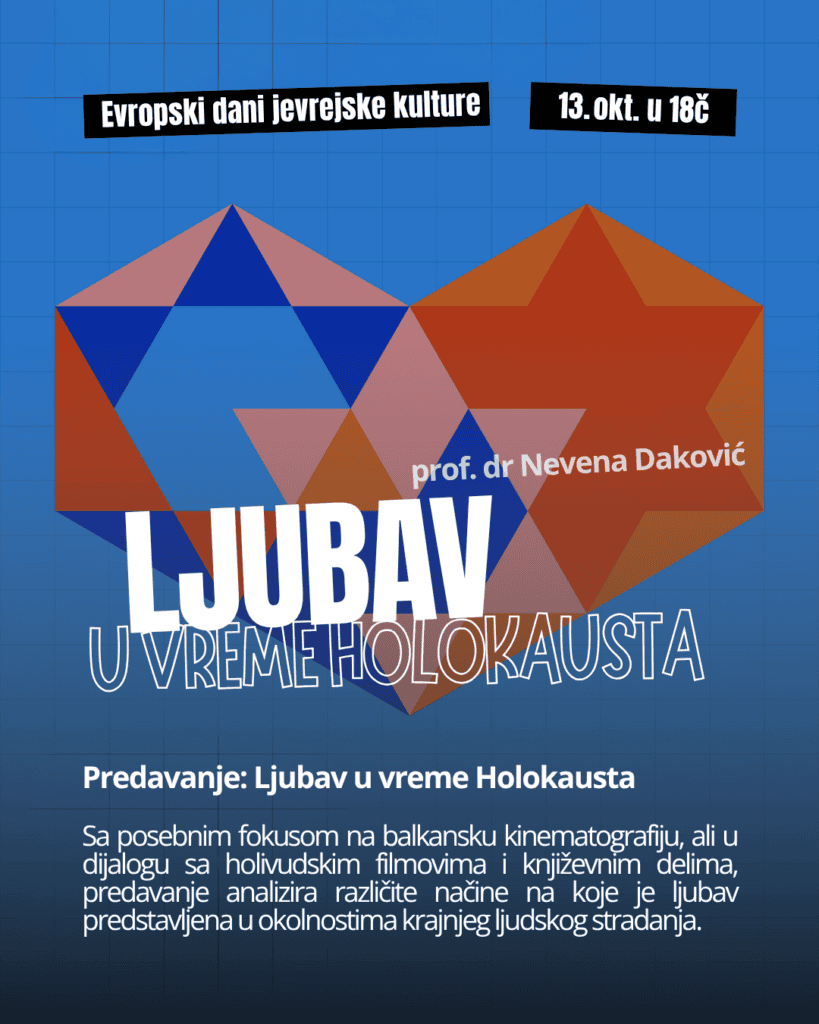
Borrowing its title from Gabriel García Márquez's famous novel, this lecture explores cinematic representations of love during the Holocaust. Focusing primarily on Balkan cinema while placing it in dialogue with Hollywood films and literary works, it examines the many ways love is portrayed under extreme circumstances. Beyond the familiar trope of the tragic, Romeo and Juliet-like romance (such as in Stars, The Ninth Circle, and The Third Half), the lecture also explores other forms of love: between parents and children, among friends, within surrogate families, on the front lines, and even in concentration camps.
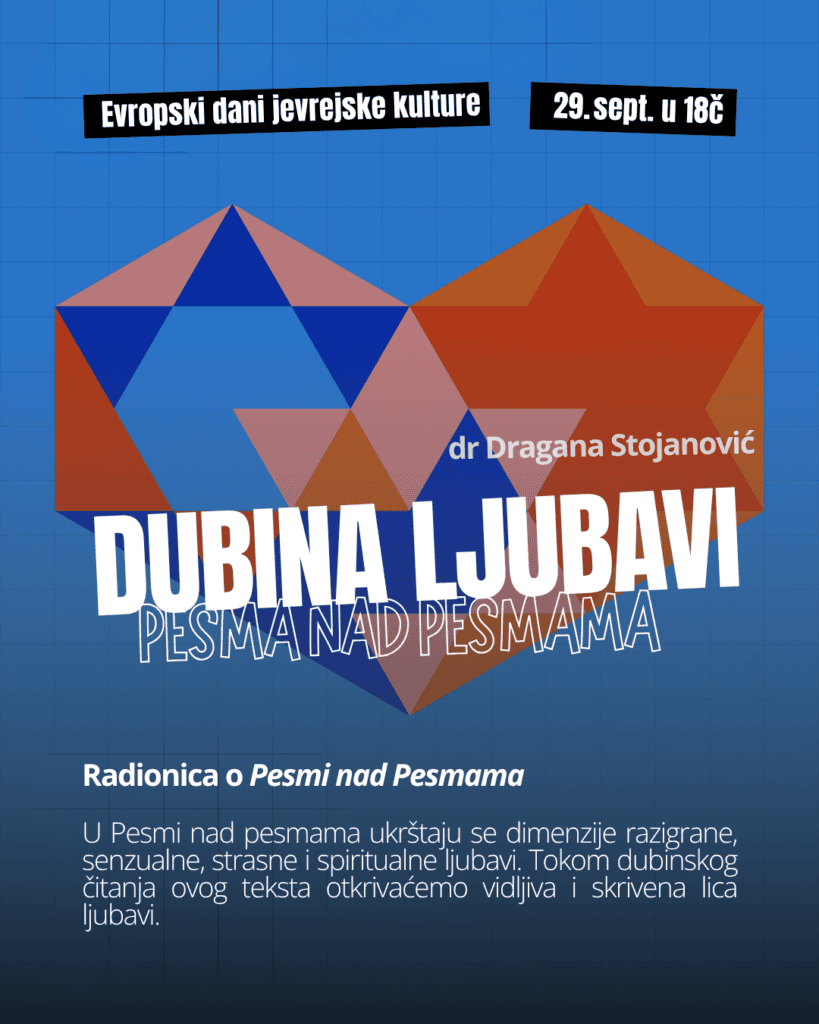
Beyond being one of the foundational texts of Jewish tradition and one of the five scrolls in the Writings (Ketuvim) of the Tanakh, the Song of Songs (heb. Shir Hashirim) invites us to immerse ourselves in love in its many forms. Its verses playfully express sensual, passionate, and spiritual dimensions of love, opening the way to multiple interpretations. In this workshop, we will go into the close reading of selected passages, and explore the visible and hidden faces of love revealed in their words.
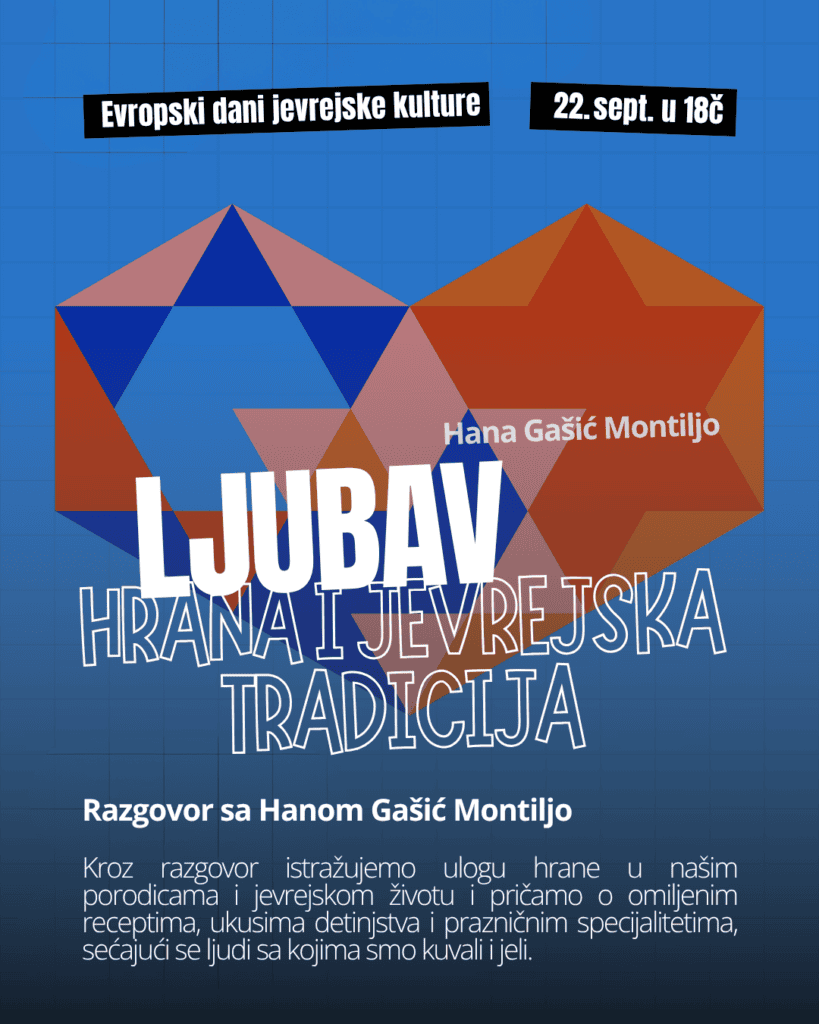
Food is much more than nourishment. It carries memories, traditions, and stories from one generation to the next. In this interactive conversation, we will explore the role food has played in our families and Jewish lives, sharing favorite recipes, childhood tastes, holiday dishes, and the people who taught us to cook them. Together, we'll reflect on how food shapes identity, preserves tradition, and expresses love, hospitality, and belonging across generations.
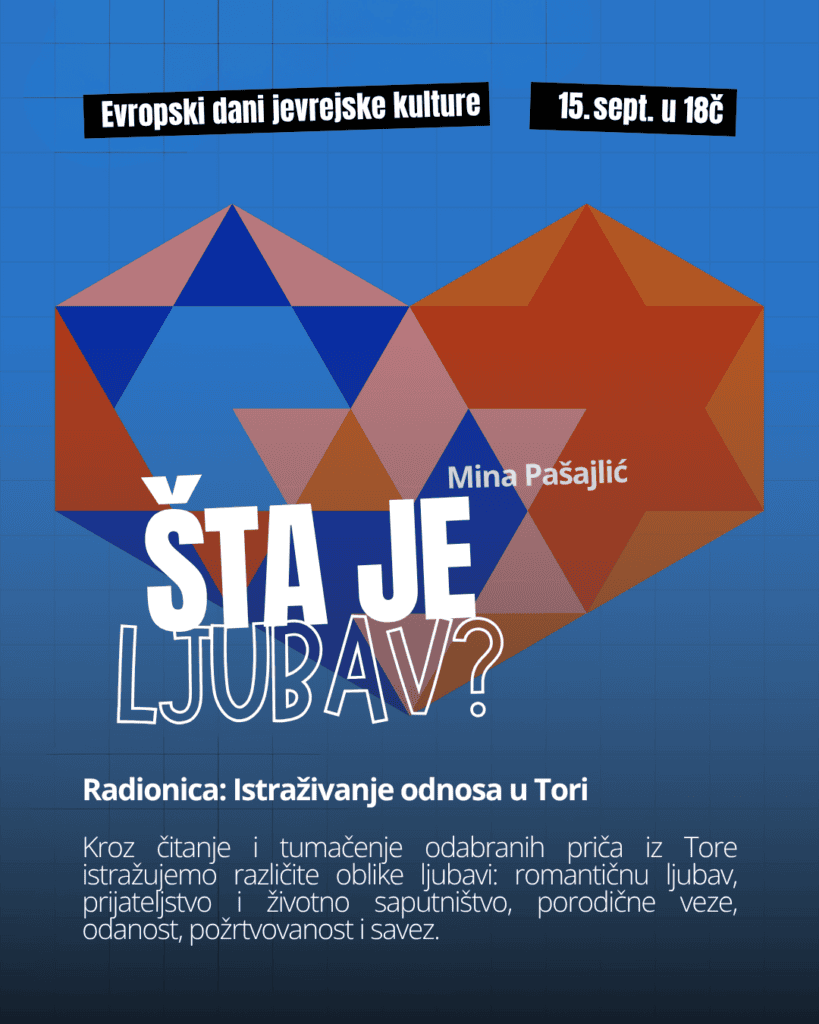
What does the Torah have to say about love? Is love a feeling, a commitment, a partnership, or something that grows over time? Through reading some of the stories in the Torah, we will explore different expressions of love: romantic love, companionship, family bonds, loyalty, sacrifice, and covenant. Together, we will examine how these ancient narratives continue to challenge and inspire our understanding of relationships today.