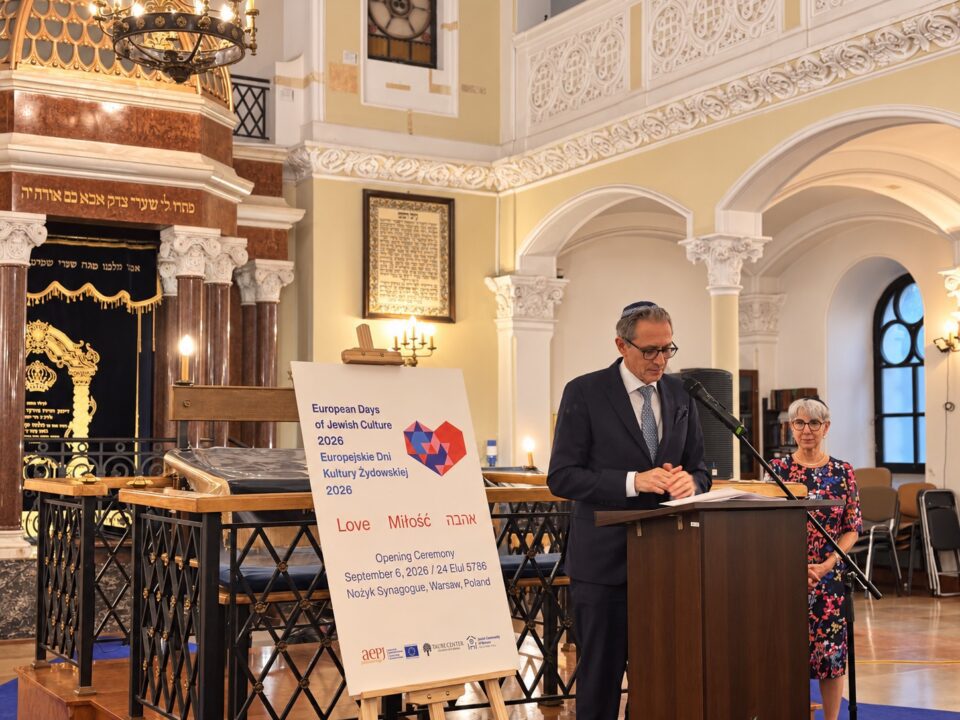
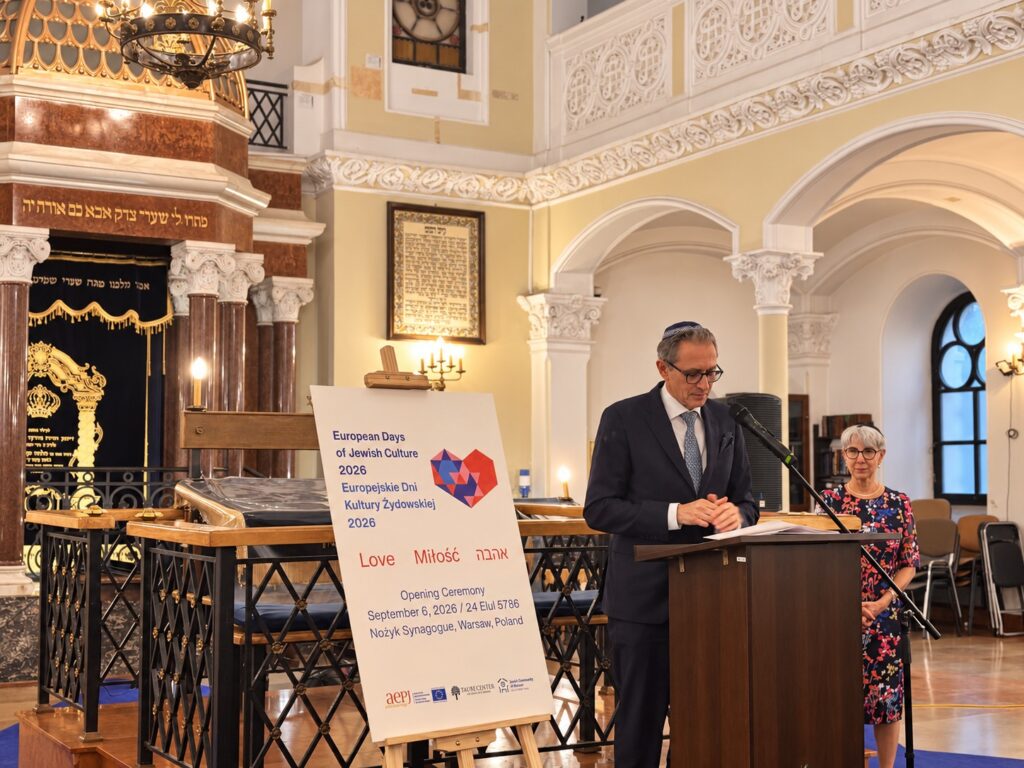
Leipzig Music Arc Joins the European Routes of Jewish Heritage, Presented During the European Days of Jewish Culture
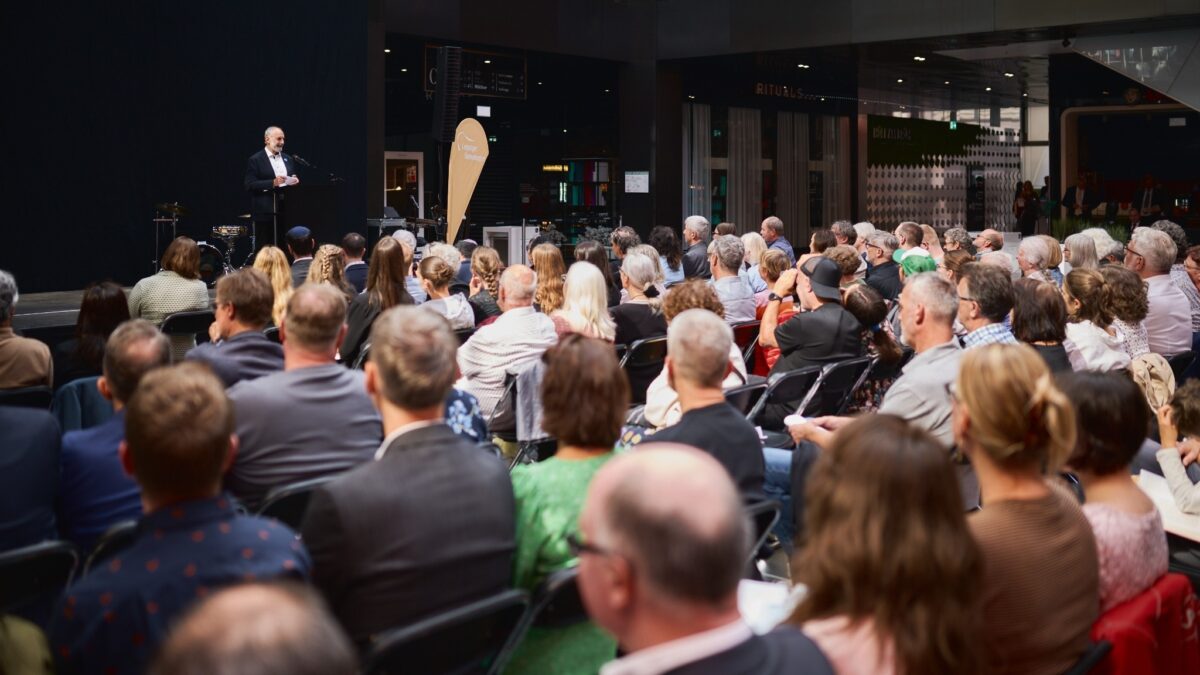
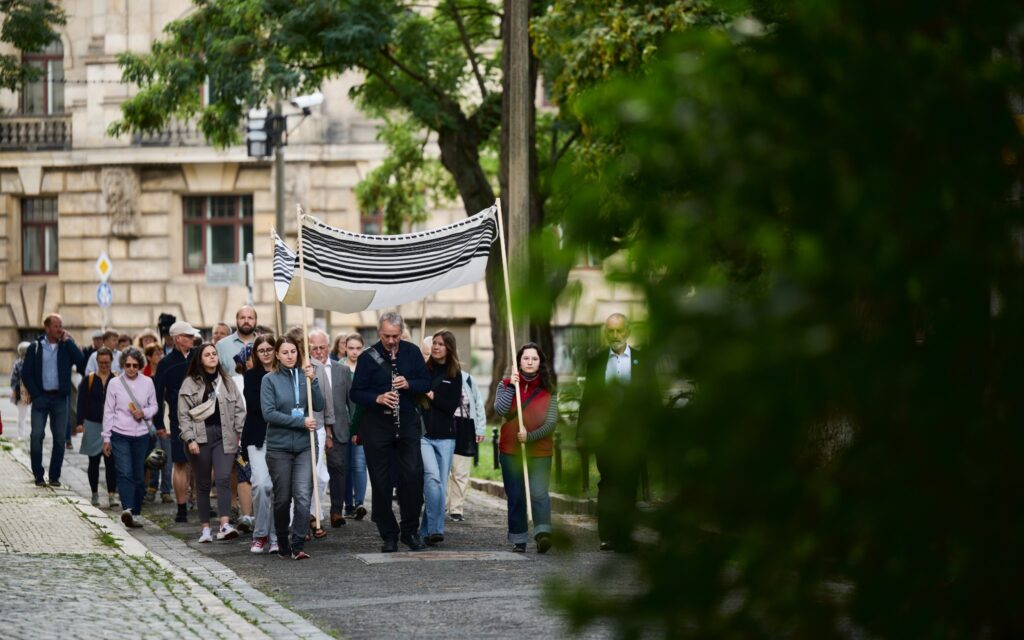
LEIPZIG, Germany — September 6, 2026. The Jewish branch of the “Leipzig Music Arc” (German: Leipziger Notenbogen) was officially presented to a wide public audience today, as part of the European Routes of Jewish Heritage, in an event in the frame of the European Days of Jewish Culture. The route invites residents and visitors to discover the places most closely linked to Leipzig’s musical history and memory, tracing music from its creation to its performance and exhibition. This new branch specifically highlights the contribution of Jewish luthiers and musicians to that history, as well as the importance of music in the life and culture of Leipzig Jewish communities along their history.
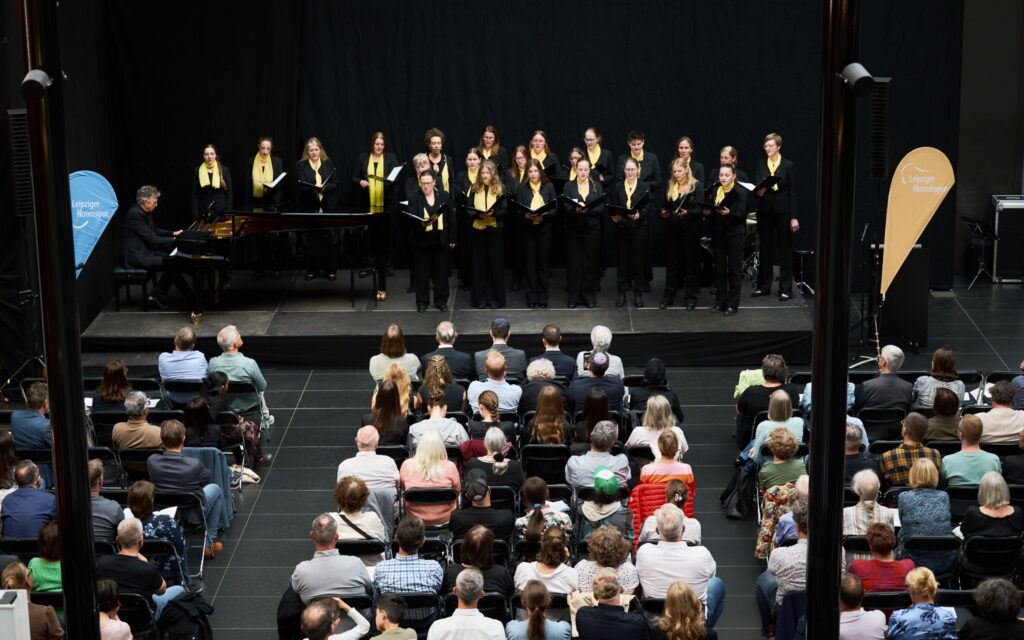
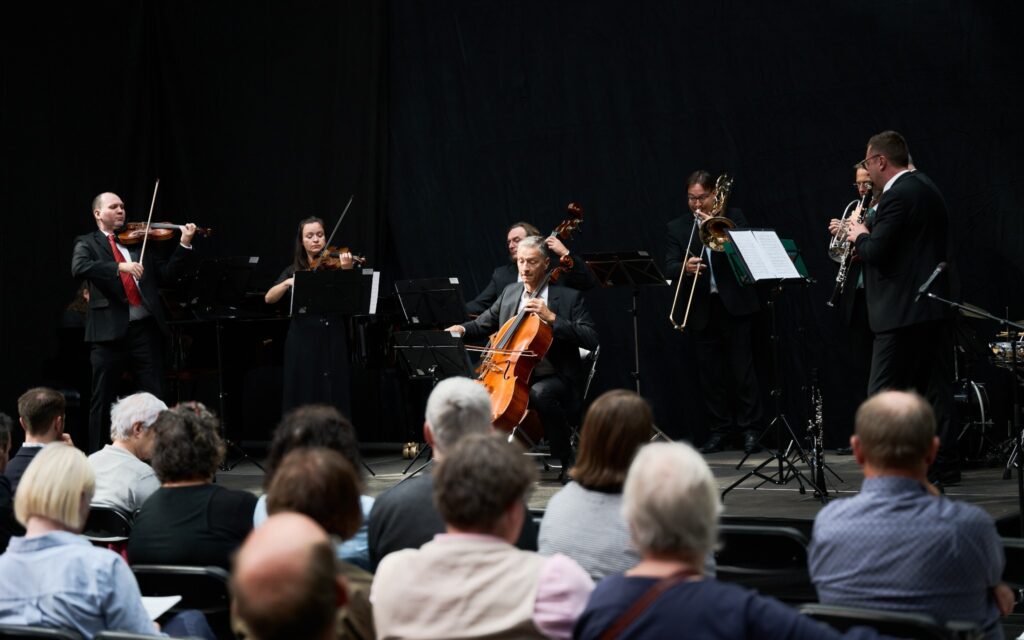
The presentation took place before a full audience and combined welcome remarks, official greetings, live music, interviews and readings connected to the stations along the route.
The session was opened and moderated by Prof. Dr. Werner Schneider, who guided the audience through the programme. Official greetings were delivered by Dr. Skadi Jennicke, Deputy Mayor for Culture of the City of Leipzig, underlining the importance of preserving and sharing Leipzig’s Jewish musical heritage.
The presentation combined spoken contributions with a rich and varied musical programme performed by students, professional musicians and ensembles from Leipzig’s music institutions. The programme spanned German-Jewish Romanticism, with works by Felix Mendelssohn Bartholdy; early twentieth-century composition, with songs by Erwin Schulhoff; and liturgical and folk traditions from across the Jewish diaspora, including Ernest Bloch’s Prayer from “From Jewish Life,” Sephardic songs performed by Ensemble Sospiratem, and pieces from the Moisei Beregovski collection “Old Jewish Folk Music.”
The programme also gave voice to memory and testimony, with Schola Cantorum performing songs of Hungarian-Jewish women from the Buchenwald sub-camp of Markkleeberg (1944/45), and Yiddish songs performed by the school choir of the Rudolf-Hildebrand-Schule. The session further included interviews connected to the route’s stations, an audio-guide demonstration, and a closing prayer and blessing given by Landesrabbiner Zsolt Balla.
A central moment of the event was the announcement that the Leipzig Music Arc has been formally included in the European Routes of Jewish Heritage. The inclusion was presented by Marc Francesch Camps, representative of the network, who took part in the event and highlighted the importance of Jewish heritage as a tool for education and for preventing hate speech and intolerance towards diversity.
The Jewish branch of the route highlights five key sites connected to the city’s Jewish musical life. It includes the Altes Operettentheater im Centraltheater, home to Leipzig’s first dedicated operetta stage from 1902 until its destruction in 1944; and the site of the Große Gemeindesynagoge (Great Community Synagogue), once the centre of liberal Judaism in Leipzig and a key gathering point for Jewish and non-Jewish musicians and audiences alike, celebrated for its remarkable acoustics and destroyed during the November Pogrom of 1938.
The route also passes several other locations, including the Mendelssohn Monument at the Thomaskirche, a 2008 recasting of the 1892 monument by Werner Stein, destroyed during the Nazi era, honouring Felix Mendelssohn Bartholdy (1809–1847), conductor of the Gewandhaus Orchestra and founder of the Leipzig Conservatory, who shaped the city’s musical life and helped revive the works of J. S. Bach.
AEPJ thanks Prof. Dr. Werner Schneider and Dr. Felix Papenhagen, of Notenspur Leipzig eV, the association behind the Leipzig Music Trail, for their commitment to preserving and bringing to the stage the intangible heritage of Jewish life in Leipzig and warmly welcomes the association to its network.