
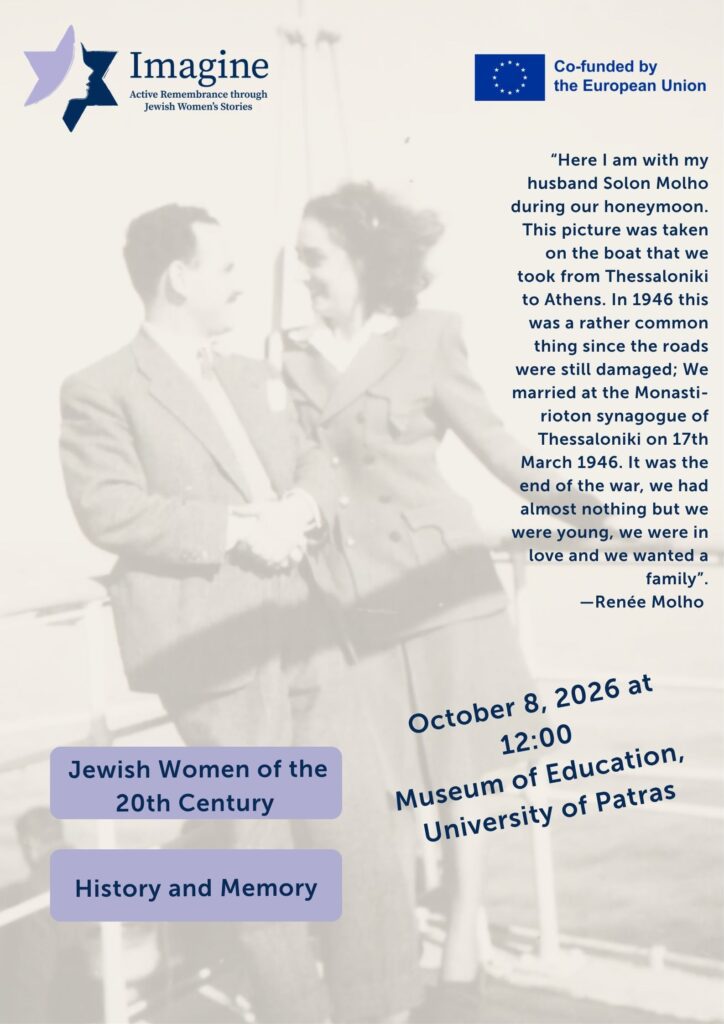
This event invites visitors of the Welcome to UP Festival to explore Jewish heritage through education, biography, and visual storytelling. It combines a guided tour of the Museum of Education of the University of Patras with the IMAGINE poster exhibition, which presents the life stories of seven Jewish women from the twentieth century. Developed by university students as part of an international educational project, the exhibition is based on archival material from the Centropa collection and highlights the diversity of Jewish experiences before, during, and after the Holocaust.
Students from the Department of Educational Sciences and Social Work who contributed to the exhibition will serve as guides, sharing not only the biographies they researched but also the process of transforming archival sources into educational narratives. Their active involvement offers visitors a unique opportunity to experience how historical research, public history, and heritage education come together to foster dialogue across generations.
The programme concludes with the screening of Centropa’s documentary A Bookstore in Six Chapters, based on the life story of Renée Molho. Alongside her testimony about Jewish life in 20th century Thessaloniki, persecution, and survival, the film tells the touching story of her relationship with her future husband, Solon, the owner of a well-known bookstore in the city. Their shared story of love, resilience, and rebuilding a life after the Holocaust offers a deeply personal perspective on the enduring power of human connection in the face of loss and displacement.
By bringing together museum education, student participation, biography, and film, the event encourages reflection on Holocaust memory, Jewish identity, and plurality of European History. In the spirit of the 2026 European Days of Jewish Culture theme, Love, it highlights love not only as a personal bond between individuals, but also as an act of remembrance, care for cultural heritage, and commitment to passing historical knowledge and family stories to future generations.
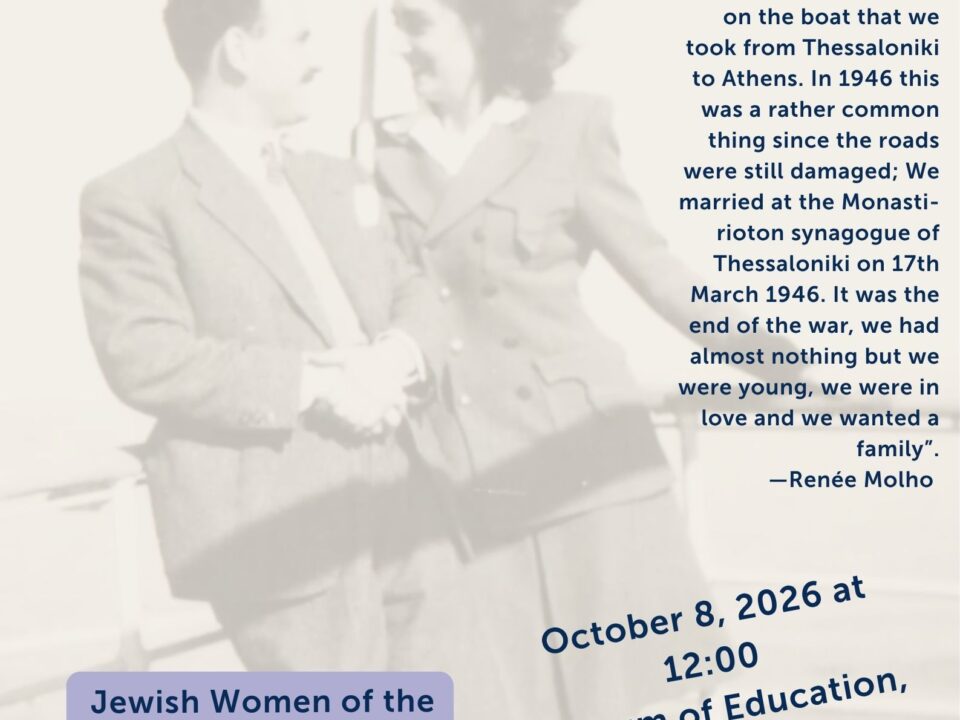
This event invites visitors of the Welcome to UP Festival to explore Jewish heritage through education, biography, and visual storytelling. It combines a guided tour of the Museum of Education of the University of Patras with the IMAGINE poster exhibition, which presents the life stories of seven Jewish women from the twentieth century. Developed by university students as part of an international educational project, the exhibition is based on archival material from the Centropa collection and highlights the diversity of Jewish experiences before, during, and after the Holocaust.
Students from the Department of Educational Sciences and Social Work who contributed to the exhibition will serve as guides, sharing not only the biographies they researched but also the process of transforming archival sources into educational narratives.
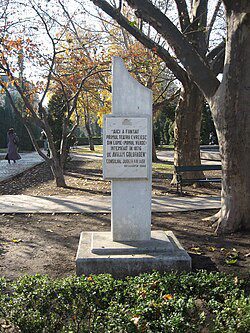
Iași, a city of approximately 390,000 inhabitants, is widely recognized as the cultural capital of Romania. Located in the North-East Region of the country, at the eastern border of the European Union and close to the Republic of Moldova, Iași has long served as a crossroads of cultures, ideas and traditions. For more than five centuries, the Jewish community of Iași—one of the oldest and most significant in Romania—has made an outstanding contribution to the city's social, economic, scientific and cultural development. The first synagogue in Iași was built in 1657, and the city became the birthplace of the world's first professional Yiddish theatre in the world, founded by Avram Goldfaden. During the first half of the twentieth century, more than half of Iași's population was Jewish, making the city one of the most important centres of Jewish life and culture in Eastern Europe.
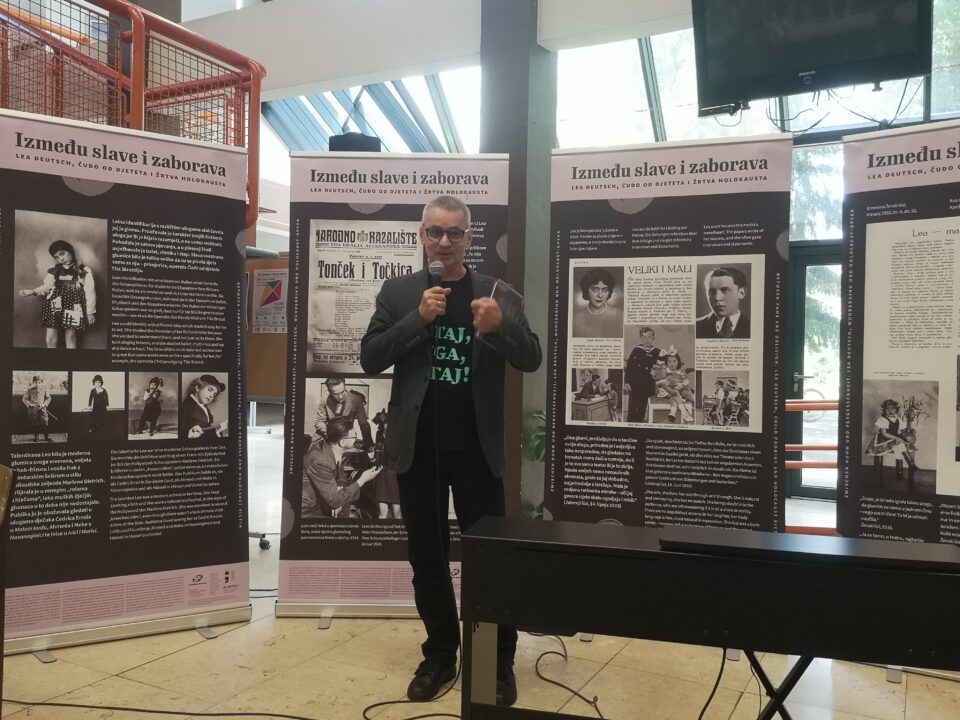
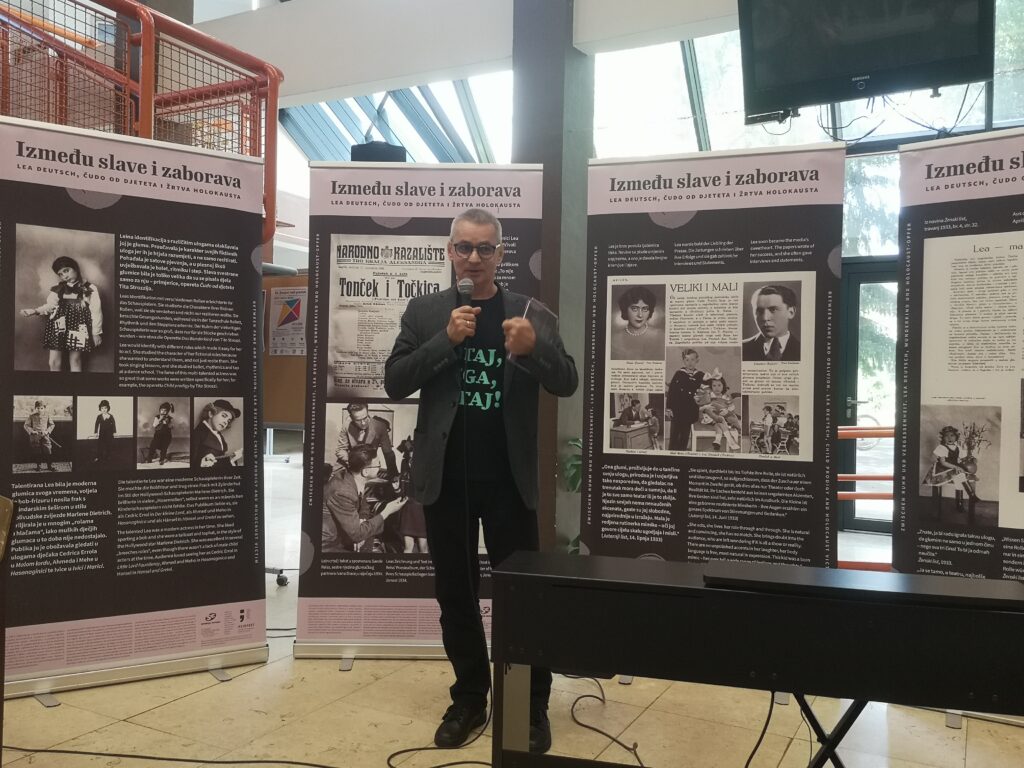
The exhibition "Between Fame and Oblivion: Lea Deutsch – A Child Star and Holocaust Victim" presents the life and tragic fate of one of Croatia’s most talented young actresses. A star of the Croatian National Theatre in Zagreb, Lea Deutsch’s promising career was brutally interrupted by the racial laws of the Independent State of Croatia and the Holocaust. As a Jewish girl, she was banned from education and performing, and she lost her life in 1943 during deportation to Auschwitz.
Based on the research of historians Dr Martina Bitunjac and Dr Damir Agičić, the exhibition uses photographs, documents and theatre materials to tell the story of Lea’s extraordinary talent, interrupted childhood and the importance of preserving cultural memory. It also highlights Jewish heritage as a history of creativity, art and contribution to the cultural life of Croatia, while promoting remembrance, tolerance, dignity and respect for human rights.
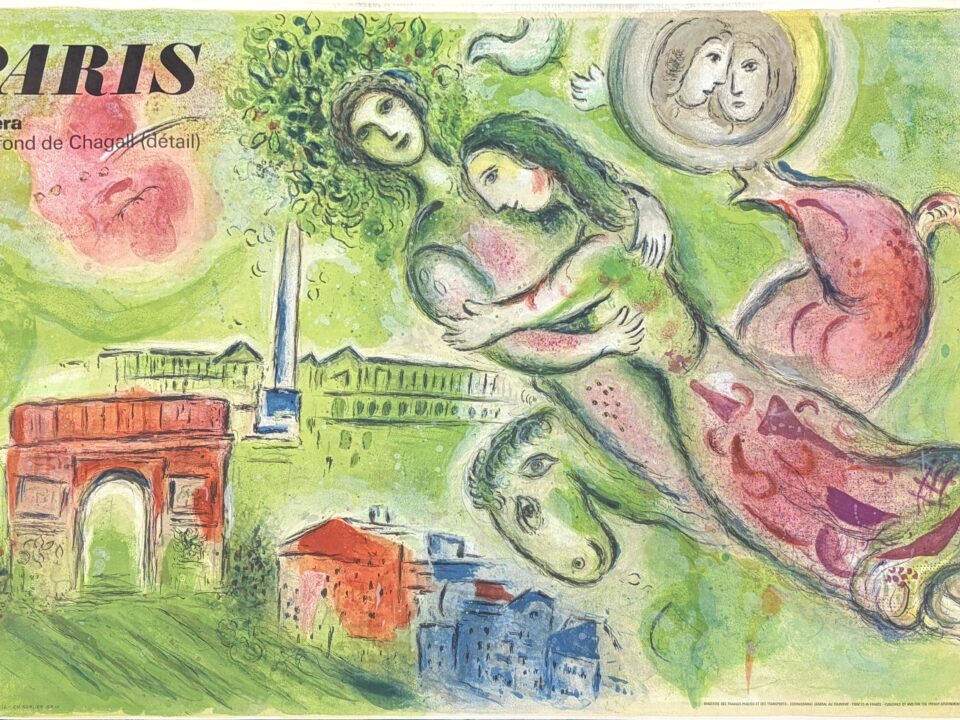
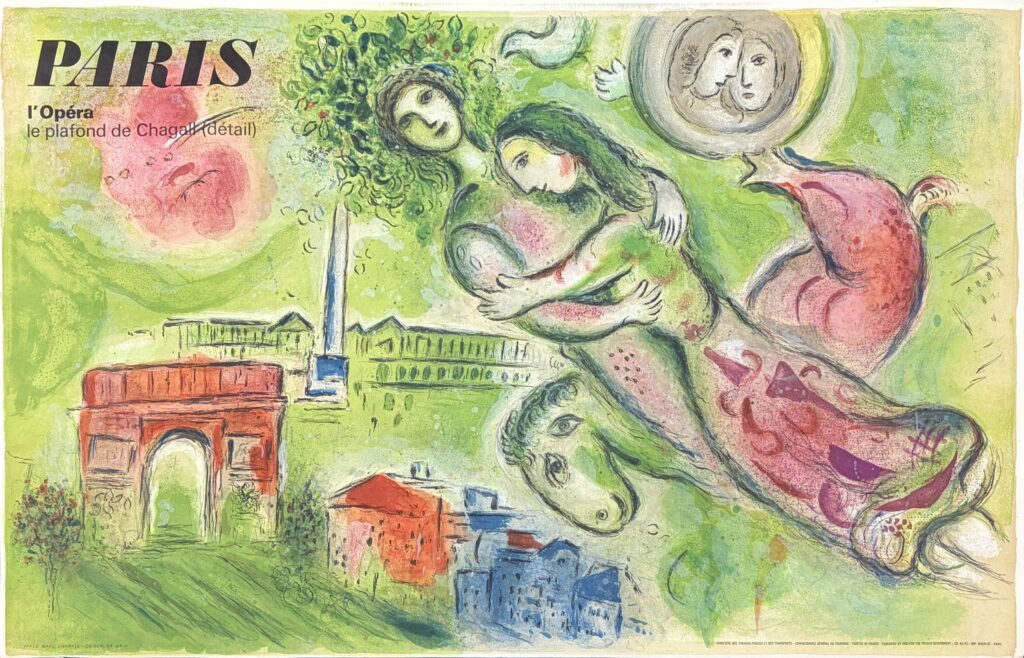
Poétique de l'amour
"Meilleures que le vin sont les amours" (Cantique des cantiques)
Qu'est-ce que le temps ? Qu'est que l'amour sinon le retour du jadis qui réveille les images perdues. "Le visage est la trace de l'inconnu " a pu écrire le philosophe Emmanuel Levinas. La Torah est donnée dans la lumière d'un regard. Telle est l'épiphanie de l'autre.
Les liens entre l'amour et le divin sont anciens dans la poésie hébraïque depuis les paroles sublimes du prophète Jérémie : ' Je me souviens à ton sujet de ta jeunesse, de l'amour, de tes fiançailles. " Quant au Cantique des cantiques, il demeure le dialogue théologique et amoureux le plus profond entre Israël, symbolisé par la Sulamite, et Dieu, qui est le bien-aimé.
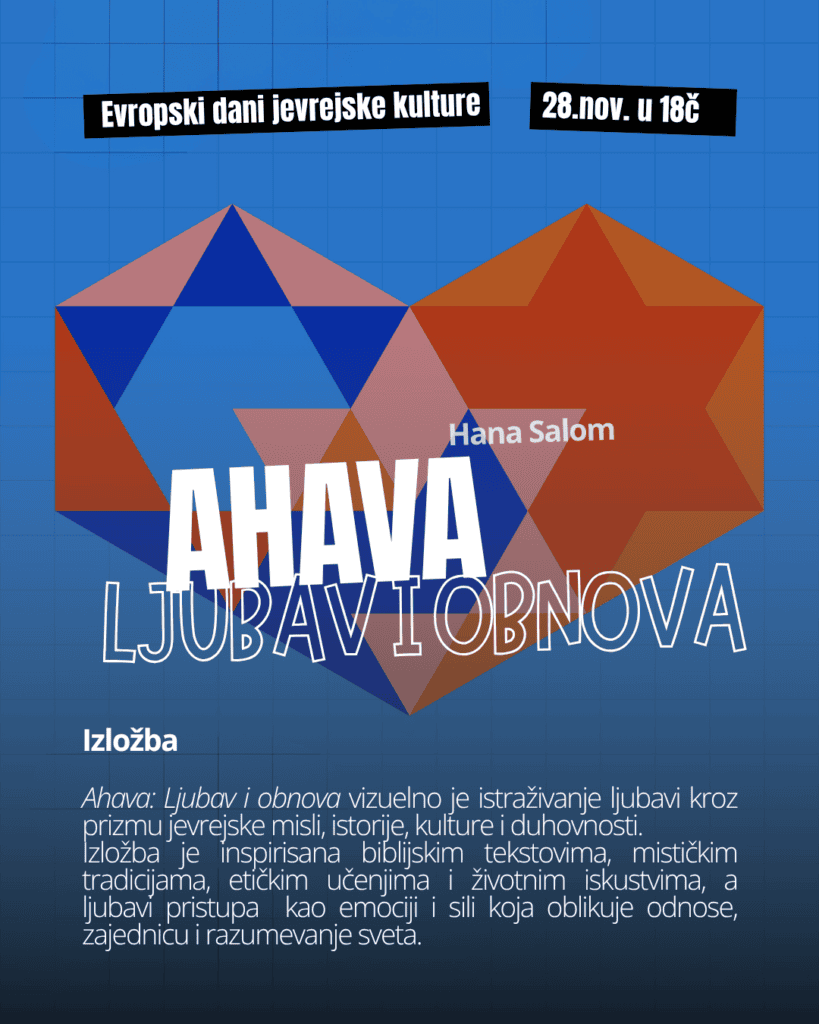
Ahava: Love and Repair is a visual exploration of love through the lens of Jewish thought, history, culture, and spirituality.
Drawing inspiration from biblical texts, mystical traditions, ethical teachings, and lived experience, the exhibition approaches love not only as an emotion, but as a force that shapes our relationships, communities, and understanding of the world. Through themes of longing and belonging, presence and absence, fracture and restoration, the works reflect on love in its many forms: romantic, familial, communal, and divine.
At the heart of the exhibition is an interest in the Jewish idea of tikkun—repair—and the possibility that love itself can be an act of healing, responsibility, and renewal. Through drawing, painting, and selected mixed-media interventions, Ahava: Love and Repair seeks to create a conversation between ancient narratives and contemporary experience, inviting viewers to reflect on the ways love continues to shape both our inner lives and the world we share.
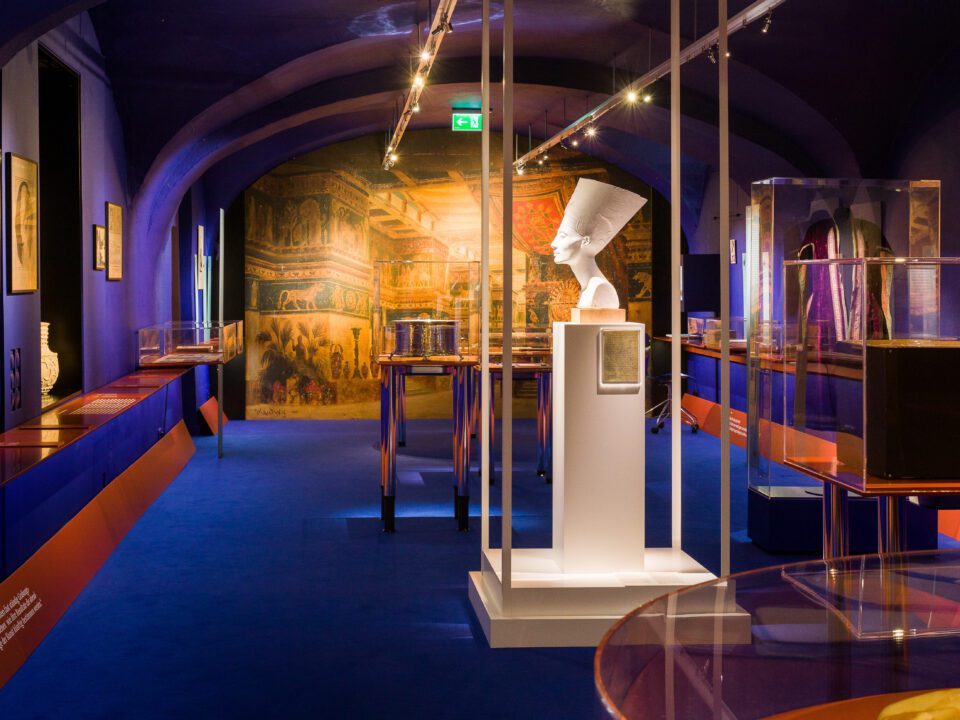
The exhibition "Die Morgenländer" is presented in the context of today's European Day of Jewish Culture, which this year is held under the theme "Love."
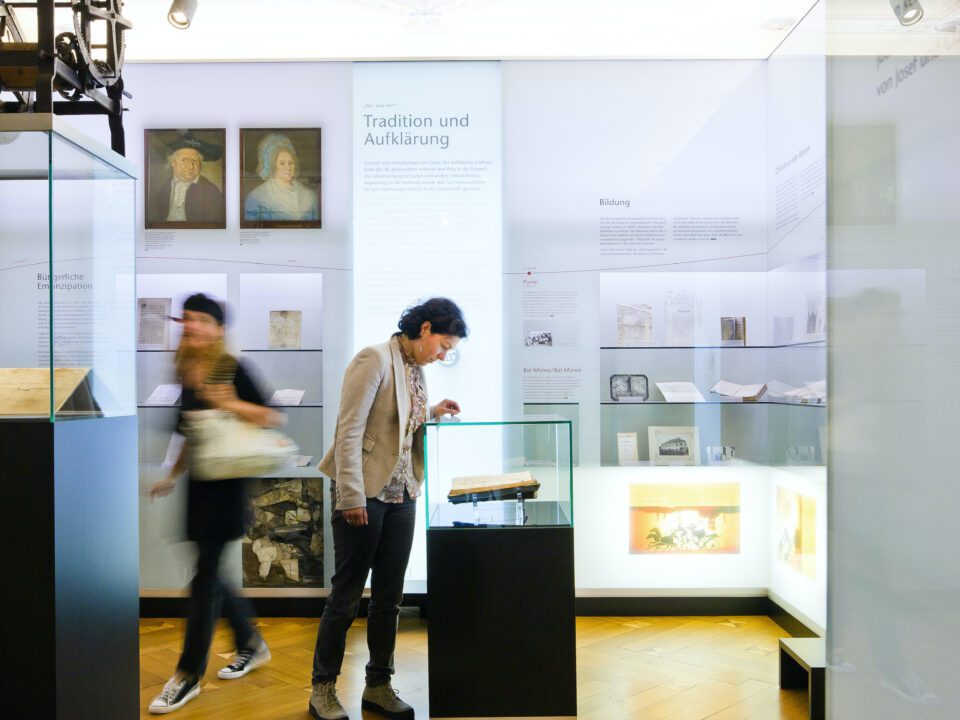
The permanent exhibition is presented in the context of today's European Day of Jewish Culture, which this year is held under the theme "Love."
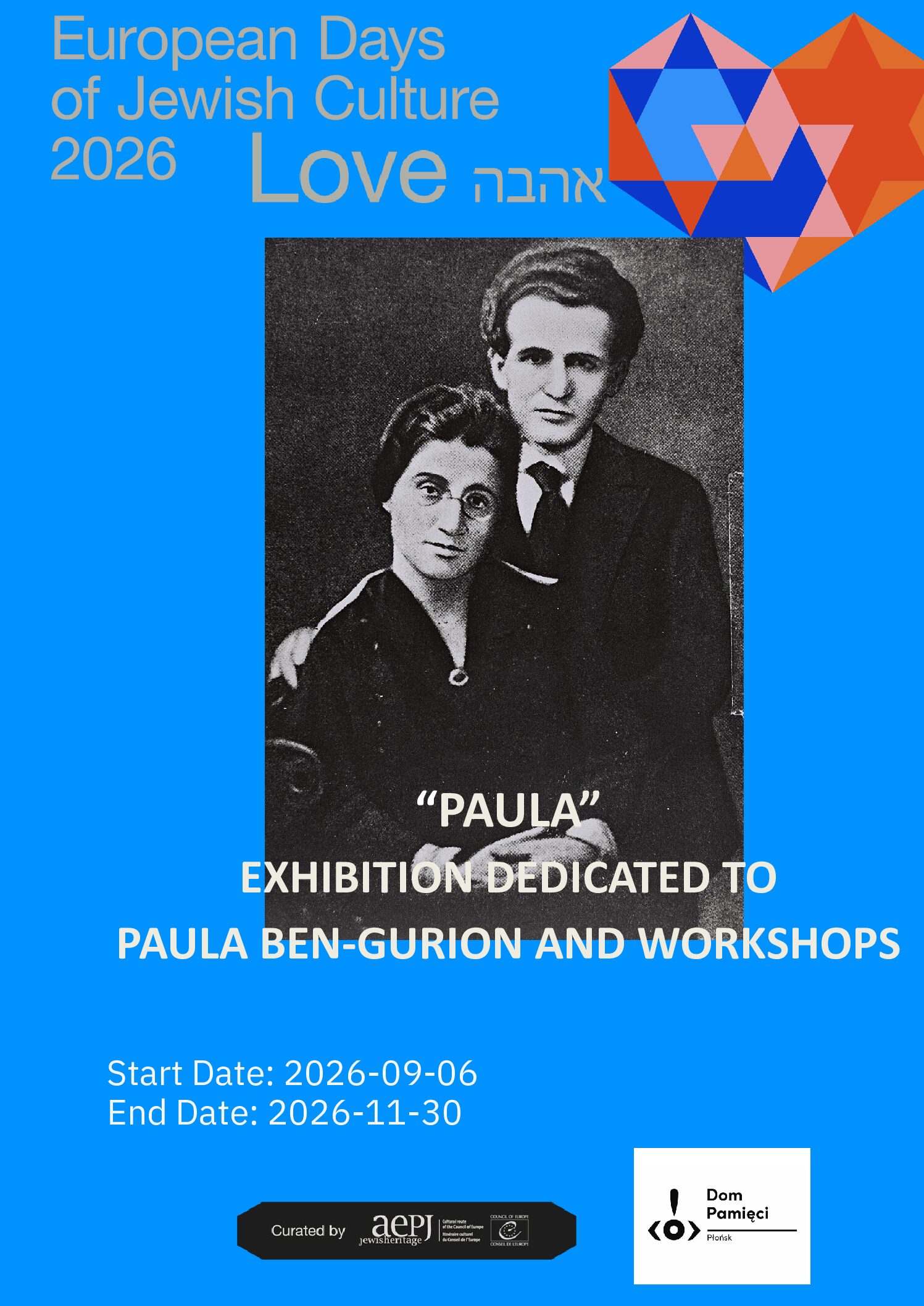
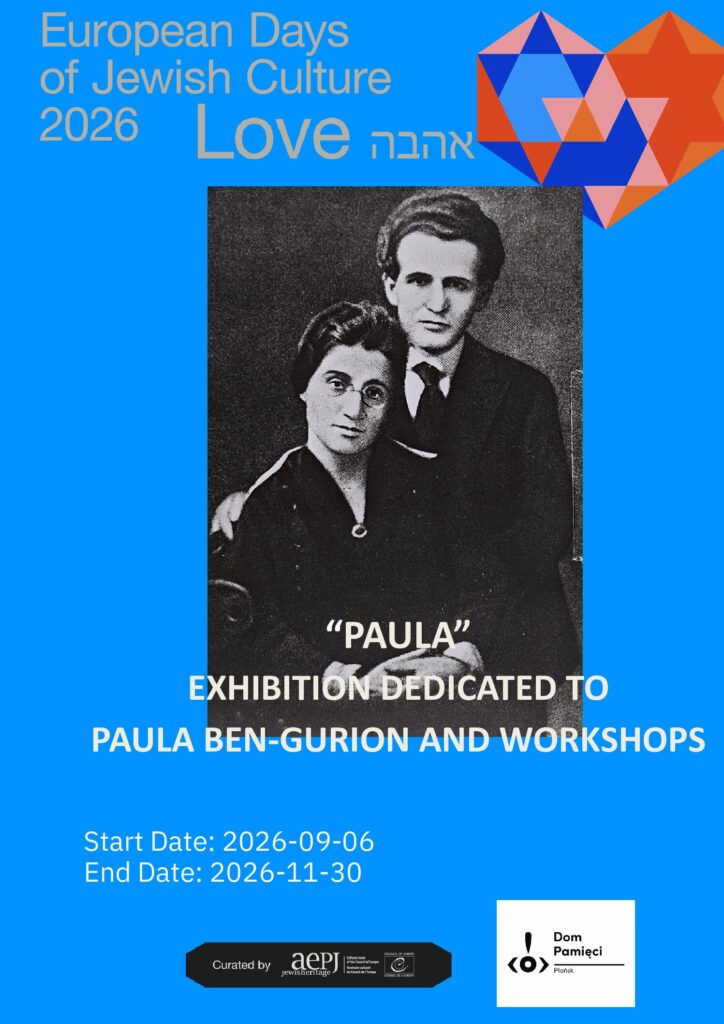
As part of this year’s European Days of Jewish Culture, which begin on September 6th under the theme “Love”, we are preparing two events at the Płońsk Memorial House:
1. A temporary panel exhibition (featuring 10 large-format roll-up banners) titled “Paula”. The project involves creating and presenting a biographical exhibition dedicated to Paula Ben-Gurion—a strong, independent woman who, as the wife of the Prime Minister of Israel, played a fundamental yet often overlooked role alongside the founder of the State of Israel. The exhibition will draw on unique archival materials (also from the collection of the National Library of Israel), including family photographs, personal correspondence between the couple, and fragments of texts from the international press of the era. The narrative will guide viewers through key stages of her life: from her youth in New York and work as a nurse, through the period of wartime separation, to her pioneering life in the Negev Desert.